Showing posts with label Korejská válka. Show all posts

Friday, 30 December 2011

Rallies before and today

Pyongyang rallies didn't look any different under Yankee imperialist dogs than under Kim Jong Il.


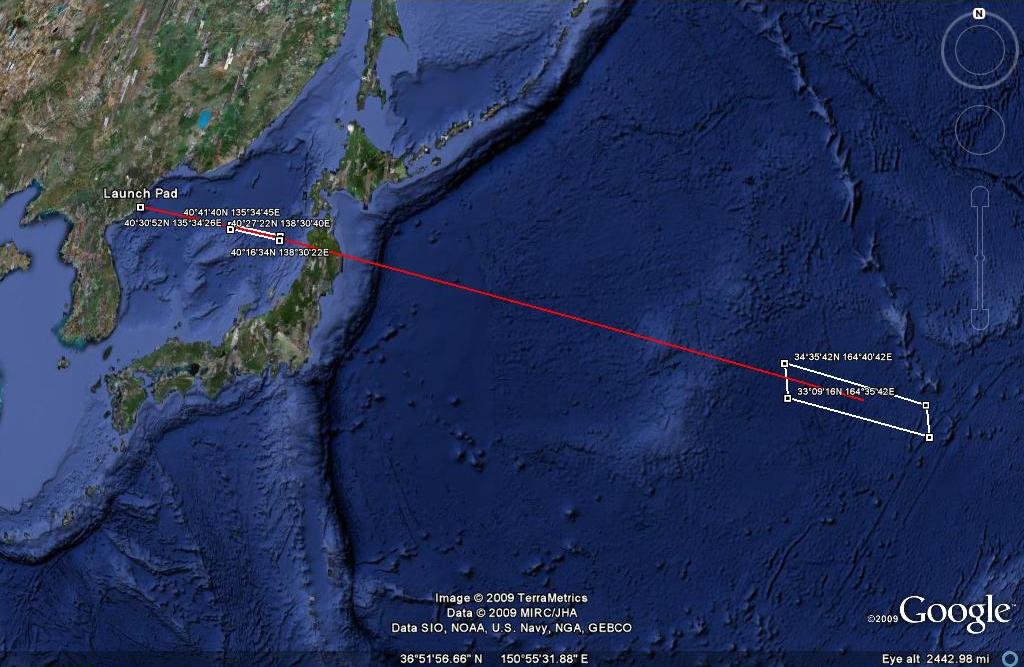
Tens of thousands of North Koreans attend a mass rally at Kim Il Sung Square in Pyongyang, North Korea, Wednesday, April 8, 2009 to celebrate the April 5th launch of the country’s rocket (source: AP)

Friday, 23 December 2011

Ke Kimově smrti

Nový vodca. Experti očakávajú, že Kim Čong-un bude pokračovať v tvrdej politickej línii svojho mŕtveho otca.
Pchjongjang povedie neskúsený diktátor Kim
Pchjongjang, Bratislava – Žezlo neohrozeného vládcu Severnej Kórey preberá po smrti Kim Čong-ila jeho syn Kim Čong-un. Severokórejské štátne médiá včera vyzvali 24 miliónov obyvateľov krajiny, aby ho uznali a podporili. Pôjde už o tretieho nasledovníka generácie, ktorú založil jeho dedo Kim Ir-sen.

Svet má však z nového panovníka obavy. „Okrem toho, že je mladý a neskúsený, veľa sa toho o ňom nevie. Pre Severnú Kóreu je dôležité iba to, aby Kim Čong-una rešpektovala Čína, pretože od nej je krajina závislá,“ povedal pre HN analytik Michal Vodrážka.

Priateľ s Čínou

Najmladšieho z troch synov mŕtveho severokórejského vodcu pokladajú za nástupcu, odkedy ho v septembri minulého roka jeho otec vymenoval za štvorhviezdičkového generála a udelili mu prominentný politický post. Na posilnenie bezpečnosti ešte vymenoval svoju sestru a jej manžela na vysoké pozície v krajine, aby vytvoril mocné trojvládie rodinnej dynastie.

Iba 27-ročný budúci vodca krajiny okrem toho urobil tento rok v máji významnú diplomatickú návštevu susednej Číny. Počas nej sa predstavil hlavnému severokórejskému mecenášovi Pekingu, čo bol zrejme jeden z najkľúčovejších diplomatických ťahov, aké mohol urobiť. „Pre Severnú Kóreu bude teraz kritických niekoľko týždňov a mesiacov. Za ten čas sa ukáže, akú silnú pozíciu Kim Čong-un v krajine má a či za ním stoja kľúčoví hráči, najmä pokiaľ ide o armádu,“ povedal pre HN analytik Jakub Kulhánek.

Experti tvrdia, že mladý Kim bude zrejme nasledovať svojho otca vo vojenských šľapajach a udrží si pevnú vládu nad jednou z najväčších armád sveta. Očakáva sa tiež, že aj napriek kritike svetových mocností bude pokračovať v zbrojnom jadrovom programe.

Pochybnosti o nástupníctve
Kim Čong-un sa podľa odhadov narodil v roku 1984. Jeho meno v preklade z čínskeho jazyka znamená „spravodlivý oblak“. Vyštudoval vo Švajčiarsku a predpokladá sa, že hovorí po anglicky a po nemecky. Najčastejšie kolujúce fotografie Kim Čong-una pred jeho uvedením na severokórejskú politickú scénu v minulom roku boli snímky z čias, keď mal iba jedenásť rokov. Nedávne zábery však ukazujú robustného muža s nakrátko ostrihanými vlasmi, ktorý sa podobá na Kim Ir-sena. Jeho účes sa stal obrovským hitom medzi Severokórejčanmi.

V krajine však panujú pochybnosti o tom, či jeho zosnulá matka, profesionálna tanečnica Ko Jong-hui, bola Kim Čong-ilovou oficiálnou manželkou, alebo len milenkou. Ide totiž o záležitosť, ktorá by mohla mať dosah na Kim Čong-unovo právo nahradiť otca na čele krajiny. 
Oľga Gluštíková

Saturday, 3 December 2011

Černý mercedes a Kim Ir-sen na klopě, tak přednáší velvyslanec KLDR

Další příspěvek v řadě, kterým po vzoru 38north.org říkám mediabusters. V úterý byla na UMV přednáška severokorejského velvyslance o denuklearizaci Korejského poloostrova, o které pro iDnes napsal článek pan Petr Štefan. V části článku, která se věnovala obsahu přednášky a následující diskuze, bylo ale několik míst, kde si myslím, že měl odvést lepší práci. Minimálně přesně reprodukovat, co ve skutečnosti z úst diplomatů KLDR zaznělo, případně upozornit na severokorejské výmysly. Níže je část článku s mými komentáři kurzívou (podtržené jsou formulace, ke kterým komentář patří), originál článku si můžete přečíst zde.

Velvyslanec prostřednictvím plamenného řečníka s ráznou dikcí zopakoval mantry, které papaláši v Pchjongjangu omílají léta. Zdůraznil, že KLDR svým jaderným programem pouze reagovala na nukleární hrozbu Spojených států. Postěžoval si, že z celé Asie jsou jaderné zbraně USA v bojových pozicích pouze v Jižní Koreji. Zde měl redaktor upozornit na klamavý / mylný argument, jaderné zbraně USA z Jižní Koreje stáhly v roce 1991.

Vyjádřil obavy Severokorejců, že Washington touží potlačit právo KLDR na existenci. "KLDR si musela pořídit jadernou zbraň, abychom obhájili svoji suverenitu," hřímal první tajemník a vysvětlil, že země bude mít jaderné zbraně, dokud nezmizí nukleární hrozba Washingtonu. Zároveň naznačil, že jaderná zařízení slouží pouze k výrobě elektřiny pro chudou zemi. Nikoliv, řekl totiž, že jaderná zařízení mají pro výrobu elektřiny sloužit v budoucnosti. V současnosti v KLDR není žádný provozuschopný reaktor, což velvyslanec i první tajemník na rozdíl od pana Štefana pravděpodobně vědí.

Naznačil, že Pchjongjang má zájem zasednout k jednacímu stolu a řešit svůj jaderný program, ale dialog s nadiktovanými podmínkami z Washingtonu prý soudruhy v KLDR nezajímá. (Spojené státy nyní podmiňují začátek rozhovorů o jaderném programu prokázáním upřímného úmyslu KLDR, že s jaderným zbraněmi skoncuje.)

Obě Koreje na konci Korejské války v padesátých letech podepsaly pouze příměří, a tak jsou formálně stále ve válečném stavu. Podle velvyslance tkví řešení právě v podepsání mírové dohody, ale tomu prý brání odlišná zřízení v obou zemích. Nikoliv. Mírová dohoda nemá být podepsána mezi Korejemi, ale mezi KLDR a USA, které uzavřely dohodu o příměří (ještě s ČLR). Toto bylo sverokorejci zopakováno několikrát, směřovala k tomu i jedna z otázek publika. Odlišné zřízení bylo zmíněno jako překážka sjednocení, nikoliv uzavření mírové dohody. Viz. citace v následujícím odstavci článku.

"My chceme sjednocení na bázi konfederace a zachování obou režimů. Jižní Korea touží po sjednocení poloostrova pod jedním systémem. Toho svého se přitom nikdo nechce vzdát. Sami posuďte, které řešení je lepší," navrhl Ri Kwang-il. Zmínil také několik příkladů, jak se v poslední době zlepšují vztahy s USA.

Monday, 15 August 2011

iHNED opět perlí

Nechci vypadat že jsem na ně nějak zasedlý, ale co je moc, to je moc. Začněme nadpisem, nesmyslem č. 1:

KLDR znovu ostřelovala jihokorejský ostrov.

KLDR střílela do moře (BBC). Jedna ze tří severokorejských střel dopadla na do oblasti NNL, ostatní do vod o které i Jižní Korea považuje za severokorejské. To by ale asi nebyl tak zajímavý titulek, tak proč to trochu nepřibarvit, že?

"Jihokorejské vojsko tentokrát dělostřeleckou palbu opětovalo".

Nesmysl č. 2. Jihokorejské ozbrojené síly dělostřeleckou palbu opětovaly i loni v listopadu.

"Vztahy mezi oběma korejskými národy ochably po loňských incidentech."

Nesmysl č. 3. Dva korejské národy? Odkdy? Tvrdí alespoň jedna ze stran, že je národem odlišným od toho druhého?

Ani se nedivím, že se gaa pod článek radši nepodepsal. Alespoň nás ale iHNED ušetřil grafiky se špatně vyznačenou NLL.

Thursday, 16 June 2011

Hospodářské noviny jako nástroj propagandy KLDR?

Tahle záležitost ve mě dříme už měsíce, od severokorejského útoku na ostrov Yongpyeong. Druhý den po něm česká parodie na seriózní tisk jménem Hospodářské noviny uveřejnila na první straně mapu Korejského poloostrova, která měla ilustrovat místo incidentu a "spornou mořskou hranici" mezi Severem a Jihem.


Všimněte si "sporné hranice". Něco se vám nezdá? Mě taky ne. Pro jistotu zvětšená část grafiky:
"Sporná hranice", tzv. Northern limit line, vede jinudy. Tak jak ji na první straně prezentovaly HN to vypadá, že Baengnyongdo, tedy největší z pěti jihokorejských ostrovů u severokorejského pobřeží  (u kterého se mimochodem na jaře potopila korveta Cheonan a byl tehdy v novinách obden) patří Severní Koreji. Jak těžké je reprodukovat správně mapu, která je k dispozici i na wikipedii, nemluvě o množství verzí na zpravodajských webech? Zjevně nad možnosti HN.
File:Northern Limit Line.svg
Wiki

Yonhap News


Další problém je tvrzení popisku, že KLDR hranici "až dosud respektovala". Opět není třeba víc snahy než pět minut četby na wiki, pokud by novinář ovšem stál o to napsat alespoň něco blížící se popisu reality. Dozvěděl by se třeba, že KLDR od roku 1973 "started to openly dispute the border by sending large groups of patrol ships over the NLL on about 43 occasions", a o pravidelných přestřelkách v oblasti od roku 1999. Místo toho HN plácnou na přední stranu úplný nesmysl.

O pár týdnů později HN uveřejnily "infografiku", spíše ale jde dezinformační grafiku. Tentokrát je jako "sporná hranice" označena linie, kterou vyhlásila KLDR jako linii dělící teritoriální vody KLDR a Jižní Koreje (jde o prodloužení military demarcation line z pevniny na moře) v roce 1999. Řada nepřesností je i v časové linii "chronologie konfliktu," ale to jsou už jen drobnosti.

Thursday, 3 March 2011

Z vojenskeho archivu

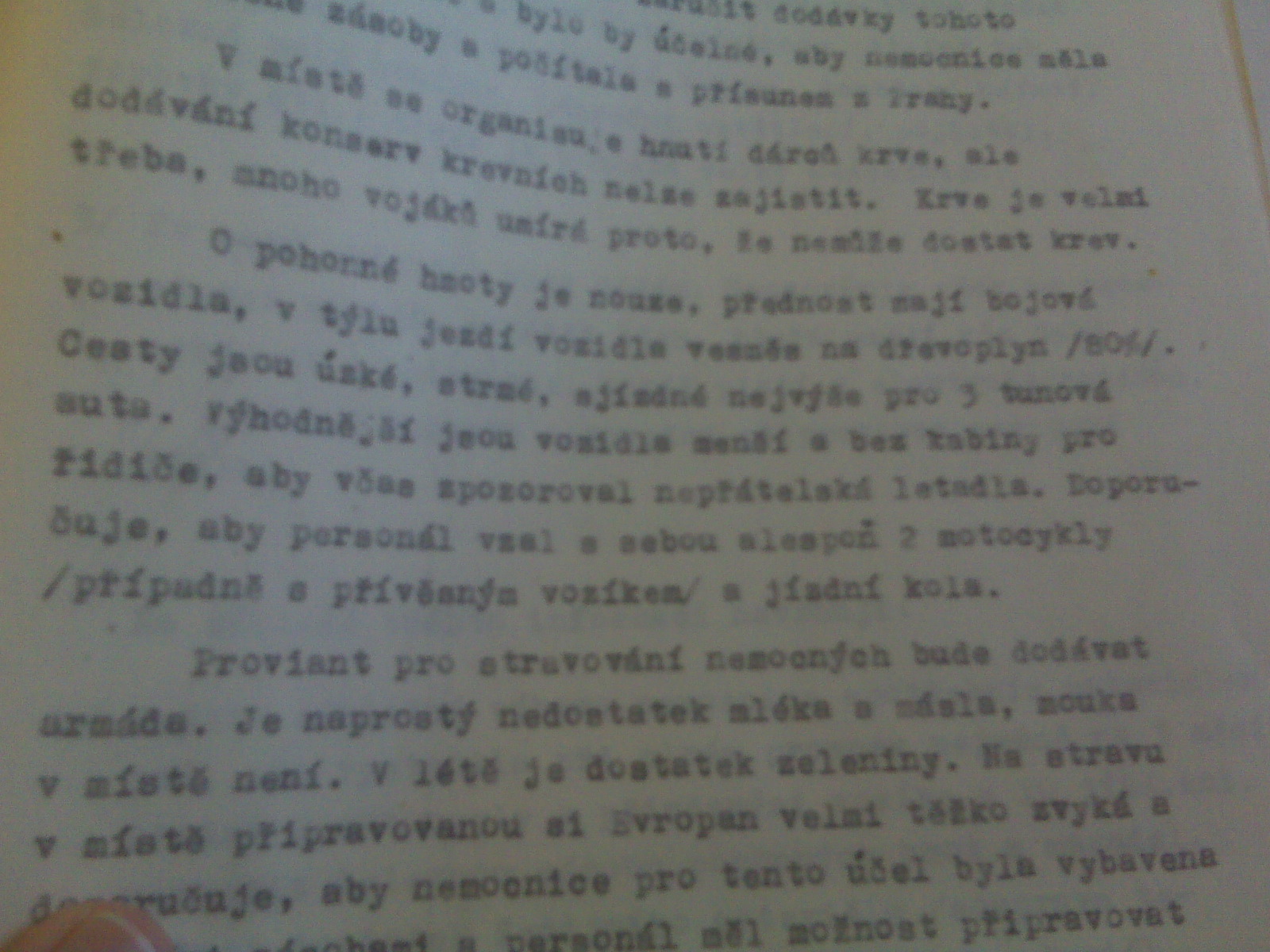
Z mojí návštěvy vojenského archivu na Invalidovně, pár špeků z dokumentů ministerstva obrany o supertajné akci K, tedy vyslání vojenské nemocnice do KLDR v průběhu korejské války. Pro zvětšení klikněte.

Přísně tajné :)
  
 Podpora ze strany soudružek velmi dobrá ... strádání korejského lidu po všech stránkách hrozné.
 Na stravu připravovanou v místě si Evropan velmi těžko zvyká ... naprostý nedostatek mléka a másla, mouka v místě není.
 Diskreditace JUDr. Válka: měl na škole americké rádio a vychvaloval, jak se jeho příbuzní v USA mají dobře.
 Kapitán Válek je doktor práv, což dával najevo tím, že vůči nám dělnickým kádrům se choval vždy povýšeně.
Šetříme valuty a nutně potřebujeme trička na volejbal...
... a také versatilky a svítilny a kabáty, protože asijským soudruhům se to všechno moc líbí :)
Posílám vám dnešní Rudé právo.

Wednesday, 29 December 2010

Rozhovor pro Hospodárske noviny


Len Čína môže ekonomicky priškrtiť Severnú Kóreu

Útok Severnej Kórey na jej južného suseda bol pomerne nečakaný. Prečo sa rozhodla pristúpiť k ozbrojenému útoku?

Severnej Kórei sa predovšetkým nepáči, keď ju svet ignoruje. Amerika aj Južná Kórea od nástupu nových prezidentov odmietali s ňou rokovať. Hlavne Južná Kórea, ktorá prerušila jednostrannú humanitárnu a hospodársku pomoc, ktorú predtým Severnej Kórei poskytovala. Amerika po nástupe Baracka Obamu tiež odmietla s Pchjongjangom hovoriť. Predchádzajúce severokórejské provokácie, ako bol napríklad jadrový test v minulom roku, mal prinútiť svet k rozhovoru. Ale Pchjongjang tým neuspel.

V najnovšom útoku teda vidíte akúsi snahu upútať na seba pozornosť?

Áno, dva roky sa o to pokúšali a tento krok je možné považovať za ďalšiu z provokácií. Chceli na seba upozorniť, že existujú. Čína navyše tvrdí, že je potrebné vrátiť sa k šesťstranným rozhovorom medzi oboma Kóreami, Čínou, Japonskom, Ruskom a USA o jadrovom programe.

Juhokórejčania však tvrdia, že k týmto rokovania opätovne pristúpia až po tom, keď sa Severokórejčania ospravedlnia, že potopili juhokórejskú loď. Tú zasiahli v máji torpédom a zabili tak 46 námorníkov.

Táto kauza sa dodnes nevyriešila?

Severná Kórea sa k tomuto činu nikdy nepriznala a na jej postoji sa doteraz nič nezmenilo.

Môže kórejská prestrelka rozpútať celosvetový konflikt? Môžu sa doň zapojiť aj Spojené štáty alebo ostatné krajiny?

V tejto chvíli sa určite nedá povedať, že Spojené štáty sú do konfliktu zapojené. Južná Kórea síce v týchto dňoch má v oblasti vojenské cvičenie, no vieme, že na ostreľovanom ostrove sa nenachádzal žiaden americký vojak. Ak by však severokórejská strela zranila alebo zabila amerického vojaka, určite by to vyvolalo silnejšiu reakciu. Konflikt by mal úplne iný náboj. Dnes sa však Európa ani Amerika do toho nezapojili.

Hrozia Severnej Kórei nejaké medzinárodné sankcie?

Otázkou je, aké ďalšie sankcie môžu byť na takúto krajinu uvalené. Pretože po tohtoročnom potopení juhokórejskej lode severokórejským torpédom Soul ohlásil, že zruší vzájomný obchod so Severnou Kóreou. Nakoniec sa to dotklo len polovice vzájomného obchodu. Zákaz sa však netýkal priemyselného komplexu v Kesongu, ktorý financujú juhokórejské spoločnosti. To je jedna z možností, ktorú môžu využiť Juhokórejčania. Obmedzili by fungovanie projektu. Avšak vzájomný obchod už raz zastavila Južná Kórea i Japonsko. Amerika uplatňuje vlastné sankcie. Čína vyzvala obe strany na mierové vyjednávania. Zatiaľ nevidím ďalšie možné sankcie.

Kto môže pomôcť zlepšiť situáciu na polostrove?

Podľa mňa len Čína. Tá by mohla ako jediná Severnú Kóreu zásadne ekonomicky obmedziť.

Jozef Tvardzik


Wednesday, 9 December 2009

Roztomilá Korejka? Zdání klame!

Nechce se mi nic vysvětlovat, takže budu předstírat že se tady žádna pauza v postování nevyskytla.

Libí se vám Korejky? A co tahle? Roztomilá?
Jmenuje se Choi Hyunmi, a je původně ze Severní Koreje, odkud uprchla společně s rodiči v roce 2004.Do té doby tvrdě trénovala na olympijské hry v Pekingu. Dokonce dostávala extra příděly jídla. V Jižní Koreji se od roku 2006 začala účastnit amatérských turnajů, a kromě jediné prohry vyhrála sedmnáct zápasů. Od roku 2007 začala boxovat profesionálně. Olympiády v Pekingu se sice nezúčastnila (Olympijský výbor zatím neuznal ženský box jako olympijský sport), ale její chvíle přišla o rok později, kdy vybojovala mistrovský titul v super lehké váze (anglický výraz "featherweight" mi přijde daleko zvukomalebnější) když porazila Japonku Tsubasa Tenku.


Choi vlevo.

PS osobně box nesnáším. Slibuji, že tohle je poprvé a naposledy co se na blogu tohle téma objevilo.

Tuesday, 16 June 2009

Militarizace od kolíbky


Kim Irsen si důležitost dětí pro revoluční boj osvojil už v Mandžusku.

Ozbrojování veškerého obyvatelstva přesahovalo rámec všeobecné vojenské povinnosti: součástí každodenního života všech obyvatel, mateřskou školou počínaje a důchodovým věkem konče, se stal výcvik ve zbrani, vojenský dril a instruktážní program. Čtenář si možná říká, jak by se tento postup mohl používat na úrovni mateřské školy. V polovině 70. let mohli zahraniční návštěvníci ukázkové mateřské školy v Pyongyangu sledovat tříleté až pětileté děti předškolního věku, kterým se podrobně předváděla Kim Irsenova partyzánská taktika v bitvě o Počchonbo v roce 1937; používal se k tomu obrovský model okolního tterénu. Řady barevných světel označovaly čáry zteče a ústupu, jiskry z křesacích kamínků dějiště jednotlivých střetnutí. Hudební program školy se zkládal z vojenských písní, které děti zpívaly za pochodu, a na hřišti se předváděly místo šlapacích aut šlapací tanky, místo kolotočů otáčivá postavení děl a kývající se letadélka. Ve střediscích mimoškolní zájmové činnosti zvaných paláce dětí mohli návštěvníci mimoto sledovat instruktáže žáků základní školy o základech střelby; používalo se při tom vzduchovek a terčíků s nápisy „Americký imperialista,“ „Japonský militarista“ a „Park Chunghee.“

Partyzánská dynastie, Adrian Buzo: str. 80 a 271-2


Do podobné střelnice jsem v Pyonyangu chodil taky, ale terčíky představovaly tanky a ponorky, které jezdily na kolejničkách mezi kopci a vynořovaly se mezi vlnami. Jestli měly insignie imperialistů už si nepamatuju. Ostatně, militarizace mého školního života pokračovala i po návratu do Č(SF)R – ze základní školy si vybavuji hod granátem na cíl. O tom kdo byl cíl ale paní učitelka tehdy pomlčela, asi ještě z ministerstva nedorazily osnovy. 

A protože se toho v KLDR moc nezměnilo. nedivil bych se kdyby se dnes v palácích dětí střílelo na Lee Myungbaka. Ostatně, s chutí bych si vystřelil taky.

Thursday, 11 June 2009

Severokorejské fantasmagorie

Tak tohle prostě musím přepostnout v celé délce. Z AoL, od pána který je považován za "neformálního mluvčího" Kim Jong Ila, se dozvíme třeba to že nedávný jaderný test byl ve skutečnosti roznětka vodíkové pumy, že sto jaderných hlavic už korejci mají od 80. let a Yongbyon byl jen maskirovka pro nepřátele juche, a plány na získání podpory jihokorejců třeba tím, že hrozí útoky na jejich jaderné elektrárny. Na druhou stranu předcházející článek autora o přechodu KLDR na plán B - maximální konfrontace s USA o pár dní předcházel květnovému jadernému testu (21. května, odkaz na něj je v textu), takže možná ví o čem mluví a nás čeká pořádné překvápko.

Nuclear war is Kim Jong-il's game plan
By Kim Myong Chol 

"Our military first policy calls for an eye for an eye, a tooth for a tooth, retaliation for retaliation, ultra-hardline for hardline, war for war, total war for total war, nuclear war for nuclear war." - Kim Jong-il 

TOKYO - A little-noted fact about the second nuclear test conducted on May 25 by the Kim Jong-il administration of the Democratic People's Republic of Korea (DPRK) is that it was a highly successful fission trigger test for multi-megaton warheads. 

These types of warheads can be detonated in outer space, far above the United States, evaporating its key targets. This is a significant indication of the supreme leader's game plan for nuclear war with the crippled superpower and its allies, Japan and South Korea. 

The North Korean Foreign Ministry on April 29 announced its plan to test-fire what it termed a long-awaited "intercontinental ballistic missile" (ICBM), the first public ICBM test after numerous missile tests, short-range, medium-range, and long-range, were conducted without notice. 

On March 9, the General Staff of the nuclear-armed Korean People's Army had begun preparing to launch simultaneous retaliatory strikes on the US, Japan and South Korea in response to their act of war. 

Although no appropriate test site for a thermonuclear bomb is available on the Korean Peninsula, North Korean scientists and engineers are confident, as a series of computer simulations have proved that their hydrogen bombs will be operational. The North Korean message is that any soft spots of the US, Japan and South Korea's defense lines will be used as the testing grounds for their thermonuclear weapons. 

The Korean Central News Agency said on May 25 that the underground nuclear test was carried out at the request of nuclear scientists and engineers and reported:
The current nuclear test was safely conducted on a new higher level in terms of its explosive power and technology of its control and the results of the test helped satisfactorily settle the scientific and technological problems arising in further increasing the power of nuclear weapons and steadily developing nuclear technology.
John Pike, the founder and director of globalsecurity.org, told the Weekly Standard on October 19, 2006, that the North Korean nuclear test that year may have been a test of a "trigger device" for a much larger hydrogen bomb. Writing in the New York Times on April 7, 2009, he revealed that "North Korea's low-yield nuclear test in October 2006 did "coincide with the sub-kiloton tests of the fission trigger for a hydrogen bomb". He added, "possibly North Korea's hydrogen bombs can be easily fitted on missiles". 

The Kim Jong-il administration has developed its global nuclear strike capability primarily as a deterrent to US invasion to keep the Korean Peninsula out of war. Secondly, it needs operational nuclear missiles targeted at US and Japanese targets in the event of a DPRK-US war. 

The North Korean state-run newspaper, Minjo Joson, vowed on June 9 to use nuclear weapons in war as "merciless means of offense to deal retaliatory strikes" against anyone who "dares infringe upon the dignity and sovereignty of the DPRK even a bit". 

Scenario for nuclear war
After shifting to a plan B, Supreme Leader Kim Jong-il has put in place a nuclear game plan as a part of the plan's military first policy to deal with nuclear rogue state America and its allies South Korea and Japan. (See Kim Jong-il shifts to plan B, Asia Times Online, May 21) 

The nuclear game plan is designed firstly to militarily prevent the US from throwing a monkey wrench into the plans of the Kim Jong-il administration for economic prosperity by 2012 - the centenary of the birth of founding father Kim Il-sung - in a bid to complete its membership of the three elite clubs of nuclear, space and economic powers. 

Its second aim is to win the hearts and minds of the 70 million Korean people, North, South and abroad, and leave little doubt in their eyes that Kim Jong-il has what it takes to neutralize and phase out the American presence in Korea. This will hasten the divided parts of ancestral Korean land - bequeathed by Dankun 5,000 years ago and Jumon 2,000 years ago - coming together under a confederal umbrella as a reunified state. 

It is designed to impress upon the Korean population that Kim Jong-il is a Korean David heroically standing up to the American Goliath, that he can lead the epic effort to settle long-smoldering moral scores with the US over a more than 100-year-old grudge match that dates as far as the 1905 Taft-Katsura Agreement and the 1866 invasion of Korea by the USS General Sherman

Third, Kim Jong-il has described the shift to plan B as a stern notice for the governments of the US and its junior allies that they cannot get away with their hostile behavior any longer, unless they are prepared to leave their booming economies consumed in a great conflagration of retaliatory thermonuclear attacks. 

The game plan assumes that the US is unlikely to shake off its aggressive behavior until it is wiped off this planet. The Barack Obama administration has not taken much time to reveal its true colors, which are no different from the George W Bush administration. There have been four compelling signs: 

First, the March 9-20 Key Resolve (Team Spirit) joint war games between the US and South Korea. 

Second, the US-led United Nation Security Council's (UNSC) condemnation of an innocuous April 5 satellite launch. 

Third, the rehashing of counterfeit money charges that the US has failed to produce compelling evidence to support. As Newsweek wrote in its June 8 issue, "The Treasury Department couldn't find a single shred of hard evidence pointing to North Korean production of counterfeit money." 

Fourth, the presence of Bush holdovers in the Obama administration, such as Stuart Levy, the architect of Bush-era financial sanctions intended to criminalize the DPRK. 

Four types of hydrogen bomb raids
The game plan for nuclear war specifies four types of thermonuclear assault: (1) the bombing of operating nuclear power stations; (2) detonations of a hydrogen bombs in seas off the US, Japan and South Korea; (3) detonations of H-bombs in space far above their heartlands; and (4) thermonuclear attacks on their urban centers. 

The first attack involves converting operating nuclear power plants on the coastline of the three countries into makeshift multi-megaton H-bombs. 

The New York Times on January 24, 1994, quoted Paul Leventhal, president of the Nuclear Control Institute, warning that North Korea could easily launch de-facto hydrogen bomb attacks on South Korea. 

"North Korean retaliation to bombing could result in vastly more fallout in the South than in the North ... North Korean retaliatory bombing could bring Chernobyls multiplied." 

If bombed, one average operating nuclear power station is estimated to spew out as much deadly fallout as 150-180 H-bombs. Bombing one nuclear power station would render the Japanese archipelago and South Korea uninhabitable. Doing the same to the US may require bombing one plant on its west coast and another on its east coast. 

Nothing is easier than bombing a power plant on a coastline. There is no need to use a ballistic missile. Primitive means will do the job. 

The US has 103 operating nuclear power stations with onsite storage of a huge quantity of spent fuel rods and Japan has 53 operating atomic power stations. Japan has a stockpile of weapons-grade plutonium - enough to assemble more than 1,000 atomic bombs in a short period of time. South Korea has 20 operating nuclear power stations with onsite storage of a huge quantity of spent fuel rods. 

The detonation of sea-borne or undersea H-bombs planted on the three countries' continental shelves will trigger nuclear tsunamis with devastating consequences. 

A 2006 RAND study of a ship-based 10-kiloton nuclear blast on the Port of Long Beach had some harrowing conclusions:
"Within the first 72 hours, the attack would devastate a vast portion of the Los Angeles metropolitan area. Because ground-burst explosions generate particularly large amounts of highly radioactive debris, fallout from the blast would cause much of the destruction. In some of the most dramatic possible outcomes:
  •  Sixty thousand people might die instantly from the blast itself or quickly thereafter from radiation poisoning. 
  •  One hundred and fifty thousand more might be exposed to hazardous levels of radioactive water and sediment from the port, requiring emergency medical treatment. 
  •  The blast and subsequent fires might completely destroy the entire infrastructure and all ships in the Port of Long Beach and the adjoining Port of Los Angeles. 
  •  Six million people might try to evacuate the Los Angeles region. 
  •  Two to three million people might need relocation because fallout will have contaminated a 500-square-kilometer area. 
  •  Gasoline supplies might run critically short across the entire region because of the loss of Long Beach's refineries - responsible for one-third of the gas west of the Rocky Mountains.
    RAND projects that the economic costs would exceed $1 trillion.
  • The third possible attack, a high-altitude detonation of hydrogen bombs that would create a powerful electromagnetic pulse (EMP), would disrupt the communications and electrical infrastructure of the US, the whole of Japan, and South Korea. 

    Many of the essential systems needed to survive war would be knocked out, as computers are instantly rendered malfunctioning or unusable. Military and communications systems such as radars, antennas, and missiles, government offices, would be put out of use, as would energy sources such as nuclear power stations and transport and communications systems including airports, airplanes, railways, cars and cell phones. 

    Ironically the ubiquity of high-tech computing gadgets in the US, Japan and South Korea has made them most vulnerable to EMP attacks. 

    The last and fourth attack would be to order into action a global nuclear strike force of dozens of MIRVed ICBMs - each bearing a thermonuclear warhead on a prefixed target. 

    The Yongbyon nuclear site has always been a decoy to attract American attention and bring it into negotiations on a peace treaty to formally end the Korean War. Since as far back as the mid-1980, North Korea has assembled 100-300 nuclear warheads in an ultra-clandestine nuclear weapons program. The missiles can be mounted on medium-range missiles designed to be nuclear capable. 

    A prototype ICBM was assembled by the end of the 1980s. Two prototype ICBMs were test-fired on May 29, 1993, with one splashing down off Honolulu and the other off Guam. The Kim Jong-il administration gave an advance notice to the US government of the long-range missile test. But the American reaction was skeptical. 

    In April 2001, the Associated Press quoted Navy representative Mark Kirk's "terrifying encounter in 1993 with what seemed possible nuclear attack" from North Korea. He recalled:
    It was a no notice, no warning missile launch out of North Korea, and for the first and only time in my career in the NMJIC [National Military Joint Intelligence Center], I got to see all of the panoply of the United States military wake up in a few seconds. 

    We did not know what kind of missile it was, so the impact area, at the beginning, was the entire United States, and you thought about what we might be doing in the next 12 minutes: would we be notifying the president that we had lost an American city? We were going to know the answer in 12 minutes. 

    At first it still included the Pacific Coast, then it included Hawaii.
    AP added: "Little was made of the 1993 launch at the time because it wasn't determined until later that it likely flew over Japan and landed in the Pacific Ocean, Kirk said." 

    It was not until 1998 that the US notified the Japanese government of the flyover of a North Korean long-range missile before splashing down off Hawaii. The US National Aeronautics and Space Administration quietly labeled the 1998 satellite launch a success. 

    According to a February 12, 2003, AP report, US intelligence had concluded a few years earlier that North Korea has a ballistic missile capable of hitting the western United States and possibly targets farther inland. 

    Kim Myong Chol is author of a number of books and papers in Korean, Japanese and English on North Korea, including Kim Jong-il's Strategy for Reunification. He has a PhD from the Democratic People's Republic of Korea's Academy of Social Sciences and is often called an "unofficial" spokesman of Kim Jong-il and North Korea. 

    (Copyright 2009 Kim Myong Chol.)

    Wednesday, 3 June 2009

    Severokorejské jaderné testy

    Zaujal mě postřeh z článku na AoL, který dává oba jaderné testy KLDR do souvislosti s mezinárodně politickými snahami Číny o vylepšení vztahů se svými sousedy. Cílem KLDR je těmito jadernými provokacemi tyto čínské snahy alespoň částečně zmařit.

    V říjnu 2006 byl v Pekingu japonský premiér Abe na návštěve která měla ukončit období napětí které trvalo během předchozí vlády Koizumiho, veřejně kvůli jeho návštěvám svatyně Yasukuni, ale neveřejně i kvůli jeho snahám prohloubit spojenectví s USA.

    Letošní test z 25. května byl uskutečněn v den, kdy taiwanský předseda vládnoucí strany KMT zahájil osmidenní návštěvu ČLR,  jedním z cílů návštěvy je přitom i příprava budoucího setkání mezi prezidenty čínských republik.


    Saturday, 21 March 2009

    KEDO a heavy fuel oil

    North Koreans demanded during 1994 negotiations with the United States that it be provided with refined oil product and light water reactors from the United States. The United States wanted to send coal and no reactors. They settled on heavy fuel oil (HFO, or “liquid coal”) simply because the DPRK had one power plant designed to use it; and on 2 gigawatts of light water reactors to be built in the DPRK. Both choices proved counter-productive for both parties although the Agreed Framework held for eight years.

    HFO proved hard for the North Koreans to absorb, as only one large power plant in the country was designed to use HFO as a full-time fuel. The HFO sent to the DPRK also contained significant amounts of sulfur and other impurities that have reportedly accelerated the corrosion of heat exchangers in DPRK power plants designed to use coal, thereby reducing their generating efficiency (and capacity). Much HFO ended up in trenches because the DPRK had no way to store it or use it.

    As for the reactors to be built at Kumho in North Korea, their long-delayed construction has been suspended, leaving them incomplete without generating a single kilowatt hour of electricity. Moreover, even if the reactors had been completed, the North Korean grid could not then nor could it ever have supported these two reactors, as the grid was far too small and simple to run such large and potentially hazardous units. During the negotiations of the 1994 Agreed Framework, North Korean grid experts told their leadership to not accept any reactors larger than (at most) 400 megawatts. American negotiators also knew about the grid constraint, but chose to ignore it because there were no (western) commercial reactor units available smaller than about a gigawatt (1000 megawatts), and because they believed that the North Korean grid problem was not theirs to solve.

    Thus, the two parties were driven by irresistible political logic to proceed with a bad project that could never have worked on North Korea’s grid. A decade of squabbling and slow motion construction then ensued, all over a project that could not satisfy North Korea’s energy aspirations, even if it had been completed.

    Source: South Korea’s Power Play at the Six-Party Talks, Nautilus institute


    Monday, 16 March 2009

    Sunday, 8 March 2009

    Z Vídně (přes Košice) do Pyonyangu vlakem

    Takovouhle dovolenou si dopřál Helmut z Grace ve Štýrsku loni v říjnu. Má blog na http://vienna-pyongyang.blogspot.com/ se spoustou fotek severokorejského venkova a vlaků.
    Z Helmutova blogu: pláž na východním pobřeží KLDR.

    Friday, 6 March 2009

    Friday, 27 February 2009

    Thursday, 26 February 2009

    Severokorejské jaderné zbraně

    Moje analýza severokorejského jaderného zbrojení a reakce USA s využitím strategic choice approach.

    North Korean Nuclear Weapons

    IRCO 410 ~ International Politics and Security

    That the U.S., even at its most powerful during the post-Cold War “unipolar moment,” was not able to resolve the issue of development of nuclear weapons by North Korea (NK / DPRK), an impoverished Stalinist sanctuary, although it has been trying to do so for 15 years now, presents one of the fascinating puzzles of international politics. It has led to an enormous amount of publications either criticizing the policies used, proposing alternative ones, or both. Given that one of the basic rules of studying politics, be it national or international, is not to take leaders’ stated goals at face value, but to try to uncover their incentives and other plausible reasons for their actions, it is surprising that analysts and commentators of all sorts still take the stated U.S. goal of denuclearization of DPRK for granted. I will argue in this paper that the reason the situation remains unresolved is because it is actually an outcome preferred by the U.S.

    I will start my analysis with the military capabilities and information that the two adversaries have. U.S. has immense military (and power projection) capabilities including almost 10 000 nuclear warheads, 11 carrier groups, and over 700 military bases worldwide that allow it to dominate the planet. DPRK has mediocre military capabilities, and no way of projecting power outside its territory, apart from its artillery shelling south of the DMZ, area that includes Seoul (home to almost 50% of SK population) and numerous U.S. military bases.

    U.S. can win a war with NK, and it is certain about this outcome. Due to this info, it is also certain NK will not attack it. NK knows it will certainly loose war with the U.S., and therefore, will not attack it or its allies, but is uncertain whether it will be attacked and vanquished by the U.S. Note that the outcome of war doesn’t mean it is costless, indeed later in the paper we will see just how costly U.S. thought it would be. Due to the imbalance in capabilities, U.S. credibly committing itself to not attack DPRK at some time in the future is unsurprisingly one of the NK’s main demands.

    NK leadership is one player in the crisis, and it is maximizing staying in power. It was faced with unprecedented crisis in the early 1990s as the Soviet bloc disintegrated and former trade partners turned to West and South Korea (SK) and ceased providing aid and subsidies energy. NK economy went into freefall while its superpower sponsor and protector disappeared, leaving NK with little resources but facing the modern U.S. and SK armies on its border. Moreover, there was the US nuclear weapons advantage, and U.S. has consistently threatened in to use nuclear weapons in NE Asia since the 1940s (Cumings 2003: 15, McCormack 2007b). NK’s strategic choice was one between position of weakness that would only get worse, or developing nuclear weapons that would provide deterrent against U.S. that is more effective and cheaper than conventional forces, and advances NK’s bargaining position in future as well. It chose the second option.

    On the U.S. side, the player is the executive, the successive administrations from Clinton in 1993 to Bush since 2001 to Obama now. In 1993, as it became known that NK is working on acquiring nukes, Clinton faced the choice between war and negotiations. War was considered to be extremely costly, the U.S. commander in Korea estimated U.S. causalities to reach 80 – 100 000 dead, with SK military deaths in hundreds of thousands (Cumings 2003:72). Clinton therefore chose negotiations, and a deal was reached to freeze NK’s nuclear program in exchange for fuel oil, civilian nuclear reactors, and security guarantees. Although U.S. promised to give DPRK ‘formal assurances’ that it would not threaten it with nuclear weapons, such assurances were never provided, and moreover, the United States was slow to implement its commitments leading to a great and increasing frustration in the NK (Carpenter 2004: 49, 50; Cumings 2003: 81-2, 87). NK thus decided to defect from the agreement, and secretly pursue HEU nuclear weapons program.

    In 2002 this became known to U.S., and U.S. did surprisingly effectively nothing. It refused to negotiate with NK seriously until 2005, and then scuttled the 2005 deal almost immediately and launched financial sanctions (McCormack 2006, 2007b). Even the “landmark” deal reached in February 2007 got quickly mired in the by now usual disagreements about details. If U.S. / Bush’s goal was denuclearization as stated, wouldn’t it have incentives to offer NK a better deal to reach it? A look at Bush’s domestic constituencies, neocons and ballistic missile defense (BMD) lobby, suggests that there were other preferences that U.S. was maximizing.

    First are the neocons, who aim for containment of China, and to achieve this want to keep troops in Japan and SK and militarize Japan. Neocons have argued for containing China since 1997, and have pursued this policy since Bush got to power (Chollet and Goldgeier 2008: 175, Klare 2006). The problem they faced was how to legitimize the massive presence of U.S. soldiers in Japan and SK (over 93 000 in 1990, down to 66 000 in 2005) in the face of disappearing threats, given that explicitly stating the mission as containing China was a non option, to the citizens of the two nations and their politicians. U.S. was facing intensifying anti-Americanism and calls for withdrawal of the troops in democratizing Korea (especially since Kim Daejung initiated sunshine policy) and increasingly vocal protests of Okinawans in Japan. Neocons also want a militarized Japan closely allied to U.S., and the propensity of Japanese for pacifism was hindering this. Second, the ballistic missile defense (BMD) lobby, personified by Frank Gaffney, and consisting of assorted Republicans and defense contractors eager to develop missile defense to ensure American hegemony for all, endless profits for some, and as a stepping stone for space based weapons.

    For these 3 goals (US presence in East Asia, militarization of Japan, and continuing development
    of BMD) the boogeyman of nuclear armed NK is crucial. Scaring population into supporting containment of U.S. geopolitical competitors and the defense spending this requires is a kind of tradition in the U.S. (e.g. bomber gap and missile gap during the Cold War), only this time it is aimed partially at non-US citizens as well. DPRK that pursuing nuclear weapons or is nuclear armed, and seen as irrational and aggressive is the best advertisement for (and assurance of) continuing U.S. troop presence in East Asia. U.S. reaching a deal with NK, and carrying out its obligations, could result in a (partly) denuclearized, less threatening NK, and deprive U.S. of the legitimization of its troops in East Asia, endanger ongoing militarization of Japan, and strip half of the rationale from developing the BMD. It is in the interest of these groups to avoid, delay or scuttle any deal with NK, while keeping the regime intact and seemingly threatening. And that is indeed what we have seen throughout the Bush period. In fact, during the 1996 – 2004 period, US supplied over $1.1 billion worth of aid to NK ($433 million, or 39% of that, under Bush), and gave more food aid to NK than China (CRS 2005: 2, 17), thus helping to keep the Pyongyang regime afloat and playing its boogeyman role. What we have witnessed since 2001 was not a failed policy, but a largely successful one that led to no calls for withdrawal of U.S. forces from East Asia, major changes in Japan’s security doctrine toward militarization, and rapid progress in fielding the BMD system that satisfied Bush’s key constituencies.

    How do you think this crisis is likely to evolve during Obama’s first term?
    DPRK will not give up its nuclear deterrent, but it is willing to freeze its nuclear program and cease proliferating nuclear and missile technology in exchange for security guarantee from US, normalization of relations including recognition of DPRK, and economic aid. In fact, this was a deal that was offered to U.S. again in October 2002, as Colin Powell admitted in April 2003 (Cumings 2003: 93). Given that U.S. knows that NK will not attack either U.S. or its allies, and unilateral U.S. military action remains prohibitively costly as in the past, it is a deal that Obama is likely to make. Obama will want to achieve an easy foreign policy success, and is not beholden to the neoconservatives and BMD lobby as Bush was. Plus, he should be able to credibly break with the policy of U.S. threats and offer NK the kind of security guarantees it requests.

    How do you predict this dispute over nuclear weapons is likely to end? And why?
    NK will never give up its nuclear deterrent, but it will not use or share it with terrorists unless attacked, as neither act would enhance its ruler’s, whoever it will be, chances of staying in power. On the contrary, both would be suicidal. U.S. will have to live with a nuclear NK, one way or the other. The optimistic scenario presented above will lead to NK cooperation (given the elite succession rough patch looming ahead for NK, this will be as good a deal as they can get) rather than defection, and U.S. responds in kind resulting in a virtuous circle of increasing trust and cooperation. Few nuclear weapons in their possession will make NK feel safer, while not destabilizing the regional situation if NK is cooperating and engaging with its neighbors in a meaningful way. There is a pessimistic version as well. Not much will change in that one, negotiations with engagement conditional on total denuclearization will continue indefinitely, with a faint hope of a regime collapse. Extremely costly war will not be an option in either case.

    References:
    Carpenter, Ted Galen, Korean Conundrum: America's Troubled Relations with North and South Korea, 2004
    Chollet, Derek and Goldgeier, James, America Between the Wars: from 11/9 to 9/11, 2008
    CRS / Congressional Research Service, Foreign Assistance to North Korea, 2005
    Cumings, Bruce, North Korea: Another Country, 2003
    Fearon, James D., Rationalist Explanations for War, International Organization 49, 1995
    Hartung, William; Berrigan, Frida; Ciarrocca, Michelle and Wingo, Jonathan, Tangled Web 2005: A Profile of the Missile Defense and Space Weapons Lobbies, World Policy Institute, 2006
    Johnson, Chalmers, Nemesis: The Last Days of the American Republic, 2006
    Klare, Michael T., Containing China: The US's real objective, Asia Times online, April 20, 2006
    McCormack, Gavan, Client State: Japan in the American Embrace, Verso, 2007a
    McCormack, Gavan, North Korea and the Birth Pangs of a New Northeast Asian Order, The Asia-Pacific Journal: Japan Focus, 2007b
    McCormack, Gavan, North Korea and the US “Strategic Decision, The Asia-Pacific Journal: Japan Focus, 2006
    Samuels, Richard J., Securing Japan: Tokyo's Grand Strategy and the Future of East Asia, 2008
    Wayne, Leslie, After High-Pressure Years, Contractors Tone Down Missile Defense Lobbying, NY Times, June 13 2000

    Wednesday, 25 February 2009

    Links

    I really enjoy Asian Times online economy section, and in fact my decision to sell all my Czech and Chinese stock in late 2007 has a lot to do with reading the analyses there and deciding they are more credible than the BS that was to be read everywhere else about how the crisis will be soon over. My favorit is Julian Desantelis, and his recent piece about Obama's mortgage rescue plan is here.

    And one more link, an interesting website of another Russian North Korea expert teaching at ANU

    http://www.korea-vision.com/

    A picture from his site: A snack kiosk and bicycle repairing station in Ryonggang county near Nampo (2007). A clear evidence of market economy, eh?

    Saturday, 21 February 2009

    Kdo si sakra myslí že je?

    Historka ilustrující Bushův přístup k problémům na Korejském poloostrově:Z David J Rothkopf, Running the World: The Inside Story of the National Security Council and the Architects of American Power, New York, Public Affairs Press, 2005